Showing posts with label ottolenghi. Show all posts

Wednesday, 9 January 2013

Pasta with yoghurt, peas and chilli - Ottolenghi recipe

Pasta with yoghurt, peas, parsley , feta
with walnuts toasted in chilli olive oil on top
Various recipes lately have been making me realise how awesome peas are.  Including this unusual recipe from Ottolenghi for pasta with yoghurt, peas and chilli.

Overall verdict:  lovely.  Though unexpectedly not that hot (in the temperature sense) because the yoghurty mixture isn't hot when you mix it with the pasta - it kind of tastes more like a pasta salad than a main course pasta dish, if you know what I mean.  I really really liked the nuts toasted in olive oil with chilli flakes especially - that is totally happening again for me on top of other pasta dishes.  And I think I might test out other options with the yoghurty pasta sauce concept as well - burnt aubergine in it would be nice, I reckon..

Anyway.  Back to this recipe:   you blend some yoghurt, peas, garlic and olive oil in a food processor:


Yoghurt, peas, garlic and olive oil
While you cook the pasta, toast some nuts in olive oil with chilli flakes.  Ottolenghi says pine nuts but I went for walnuts because I like them better and had some left over from this pesto experiment.   And also I didn't have any pine nuts.  You should, at the same time, cook the remaining peas - Ottolenghi suggests doing this in a third pan but I didn't want my lovely husband to hate me (he does the washing up) so I just put them in with the pasta, half way through.  You can totally tell from Ottolenghi's recipes that he creates them in a restaurant kitchen where he does not have to do the washing up or be married to the person who does the washing up.

Toasting walnuts in olive oil with chilli flakes


Toasting walnuts in olive oil with chilli flakes

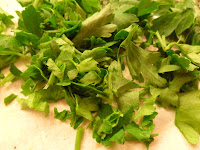
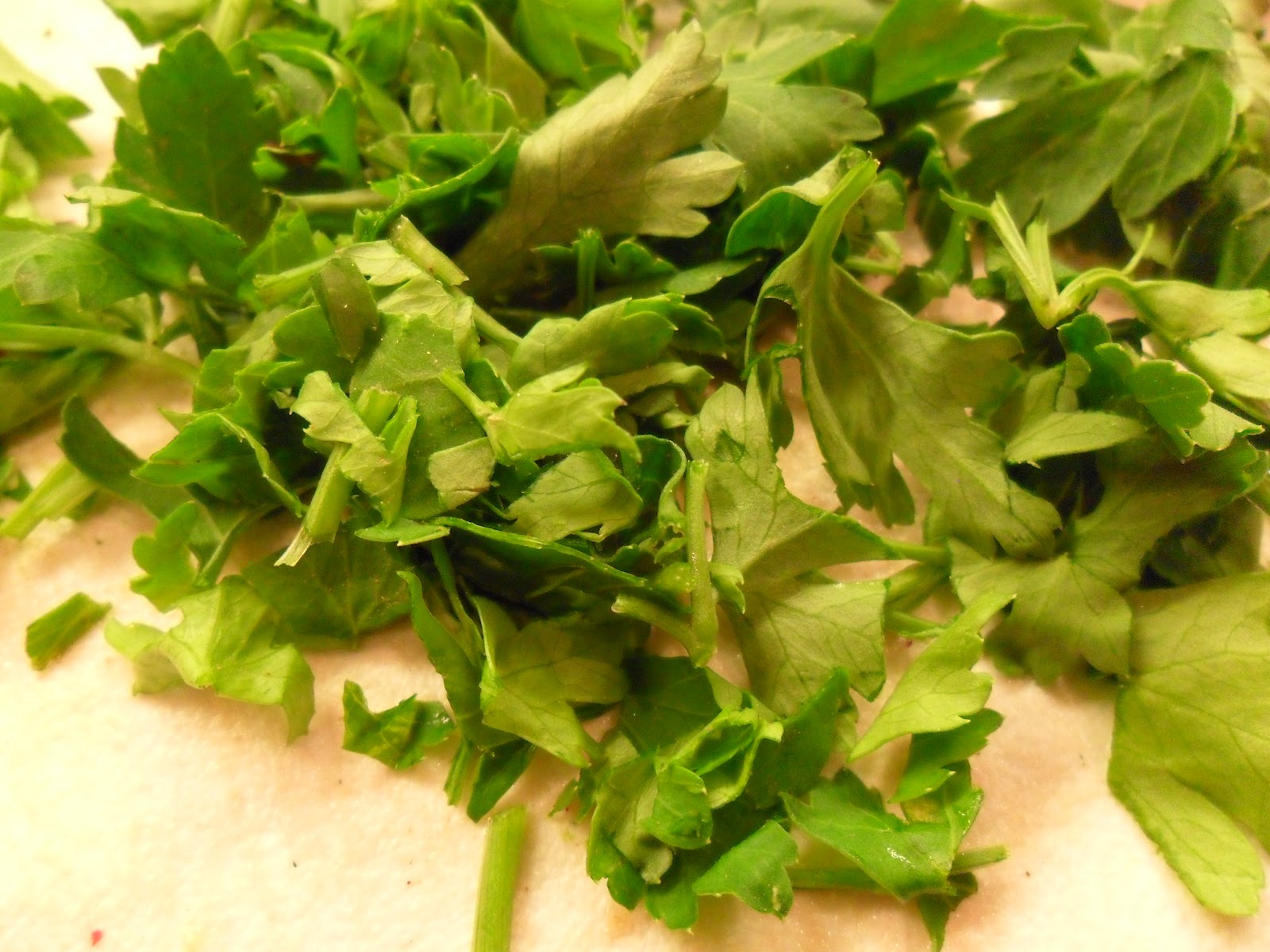
Chop up some feta and herbs - Ottolenghi says basil but I went for parsley for roughly similar reasons to the pine-nuts/walnuts thing earlier!  I think mint/dill would be nice too.


Feta and parsley
You then stir it all together - adding the yoghurt mixture slowly to the pasta to avoid it splitting - and with the nuts on top to look artistic.
Pasta with yoghurt, peas, parsley and feta

Pasta with yoghurt, peas, parsley and feta

Pasta with yoghurt, peas, parsley , feta
with walnuts toasted in chilli olive oil on top


Saturday, 5 January 2013

Khachapuri - the food of the gods

Mmmm, khachapuri
So, we went to Moscow about a year ago, and - apart from the Kremlin and other irrelevances - the best thing was the Georgian food.  And the best thing about the Georgian food was khachapuri.  I could try to describe it but it wouldn't really work - you just need to try it.  There are variants but, essentially, it's flat bread with cheese on top and eggs cracked in and cooked on the hot bread.  I know, what you're thinking, "I can eat bread, cheese and eggs any time", but khachapuri is just SO much more than the sum of its parts.  It is glorious stuff.

As soon as we came back, we investigated Georgian restaurants in London - Tamada, in St Johns Wood, is pretty good but, really, I wanted to make it at home.  I was thrilled to see that Ottolenghi's Jerusalem cookbook, which I have out from the library, had a recipe, so I gave it a whirl.

It was great fun to make - particularly the final bit where you had to make little boats with the dough (made in a similar way to this recipe) and put an egg yolk in each one, along with as much of the egg white as you could fit in.  The recipe suggests that you  pinch two ends of dough and then straighten the side "walls" but I found it easier (after a bit of trial and error) to make the "walls" first and then pinch the ends.
Khachapuri
Khachapuri boats


They were yummy.  Key, I think to them, is the spicing - za'atar, along with some lemon and salt and pepper.  It's odd because I hadn't previously realised that khachapuri were spiced but, as soon as I'd spiced the cheese mixture, I knew it was going to taste like the khachapuri of Moscow.  The mixture of ricotta, halloumi and feta also worked well but I'd be inclined - next time - to have more cheese mixture: dough ratio.  And probably to make a couple of bigger ones to split rather than the small ones as they are a) fiddlier and b) mean that there's more bread than eggy/cheesey goodness!

Putting egg yolks in the khahapuri
Putting egg yolks in the khachapuri


Khachapuri with yolks ready to go into the oven

Khachapuri all done!

It does all make me realise how geographically close Gujarat is to Georgia/other Middle Eastern countries generally, "khachapuri" means "undercooked bread" in Gujarati, doubtless referring to the fact that the egg cooks on the bread.

Monday, 31 December 2012

Roasted aubergine with fried onion and chopped lemon - Ottolenghi recipe

Roasted aubergine with fried onion and chopped lemon
So, I've got Ottolenghi's Jerusalem cookbook out from the library at the moment - it is awesome, by the way  - and, inevitably, an aubergine recipe caught my eye..  It's funny, I clearly named this blog after aubergines but, honestly, I didn't realise just how much I cooked with them until I started posting and "aubergines" started looming so large in the tags list.  They are amazing, though - so versatile!  Anyway.  Anything that includes fried onions and lemon and aubergine is good for me..  

Ottolenghi has helpfully put the whole recipe in a Guardian article here so I won't bore you with the details but basically, you cut crosses in aubergines and roast them with olive oil, salt and black pepper on top:


The sacrificial aubergines with their flesh cut open

I slid some garlic into the slits because it is tasty and I could (Ottolenghi refrains):

Black peppery aubergines with stealthy garlic slipped in
You then fry some onion with chilli and sumac and tasty things of this nature:


For a minute at the end you add in the feta:


And then you mix the chopped lemon flesh, chilli and garlic in with the onions and feta mixture and put on top of the roasted aubergines:  voila!  You can eat warm or at room temperature as you prefer.  It is quite an intense dish, so I recommend something relatively bland to go with it - some nice bread, perhaps.

Roasted aubergine with fried onion and chopped lemon
This may sound obvious but you really do have to like lemon for this dish to work for you.  Lots of recipes with lemon call for just a little twist of it but this one - with the whole chopped lemon in it - really requires you to love your lemons.  Luckily, I do.  I've always loved sour flavours, I was always That Child who stole the citrus slices from everyone's drinks.

Roasted aubergine with fried onion and chopped lemon

Monday, 23 July 2012

Restaurant review - Ottolenghi, Islington and Nopi


I have been to both Ottolenghi restaurants in Islington and NOPI in Soho. I really wanted to love them as much as I love the cookbooks but, sadly, that was not to be. My view on both restaurants was pretty similar so I'll review them in the same post.

Both restaurants had much more limited vegetarian options than you would expect from Ottolenghi's Guardian column and cookbooks – it's not so much that there weren't quite a number of options as that they were almost uniformly “lighter” options, more accents to the meat dishes in the mezze than substantial in and of themselves and, often, with ingredients repeated throughout the vegetarian options so it was hard to get dishes that were genuinely different from one another.

Essentially, I got the impression that no-one had actually looked at the whole of the menu from a vegetarian's perspective – each individual dish was nice but it was hard to put together a complete meal from the vegetarian dishes on the table without a) repeating ingredients a lot and b) eating a lot of vegetables and not much protein/carbohydrate. I don't want to sound like a barbarian but, really, I do expect to be full after spending £30+ on food in a restaurant. Even by the standards of nice London restaurants, I thought both were overpriced – it's not that the food wasn't good but it just wasn't quite priced right for me, for the prices they charge, I expect (literally) more.

I had one Islington restaurant specific gripe, too: we'd booked in advance but were sat on the long communal table without being warned of this on the phone – if we had been told, we would have changed the booking for a time when we could get a table to ourselves – the staff's attitude seemed to be very much “if you're in the know, then you'll get your own table, otherwise, we won't tell you”. I don't like that attitude much.

Overall, I'd rather stay at home with my cookbooks. Where I can get a table to myself.

Saturday, 21 July 2012

Cookbook review - Ottolenghi, Plenty


Recently, Amazon sent me an e-mail inviting me to trade in my copy of Plenty. I instinctively wanted to go and clutch it. It is MINE all MINE and they can't take it away from me.

Anyway. This reminded me that I have been meaning to review it for a while though, perhaps, I hardly need to as the fact that I named this blog after one of his chapter titles probably tells you that I like it very much.

It's one of my favourite cookbooks. I particularly love the paella recipe, the ratatouille, and the stuffed onions. When he writes in The Guardian, commenters often make fun of his very lengthy lists of ingredients and it's true that virtually every recipe has more than 15 ingredients in it and is quite fiddly. But that's how you produce complex intricate flavours. It just isn't possible to do that quickly and with two ingredients, people!

I also make fun of his instructions sometimes – I find it particularly entertaining when he tells you things like “fry this for 6 minutes then add this and fry it for a further minute” but, if I'm honest, the recipes kind of do come out better when I follow those instructions than when I wing it. (Except for the stuffed onions which I've made often enough that I don't even bother looking at the recipe.)

What I really like about Ottolenghi's cookbooks is the precision, in fact, though I do mock it sometimes. You can really tell that he runs his own restaurants: the instructions are incredibly detailed and clear. There's none of this “oh, between 325 and 450ml of buttermilk”type stuff, Ottolenghi will tell you exact quantities and timings and will detail all of the spicing, so that you aren't left with “oh, season to taste” or similar rubbish.

The cookbooks are, I think, for the experienced cook but, if you are an experienced cook, especially if you are vegetarian or like to cook complicated vegetarian food, they are absolutely fantastic. If you want a cookbook that will produce nice food but with simpler recipes and shorter ingredient lists, I'd suggest High Fearnley-Whittingstall'sVeg instead.

I will review the Ottolenghi restaurants in a separate post.

Thursday, 10 May 2012

Barley, tomato, feta and garlic risotto - Ottolenghi recipe

This is how much garlic goes in!
I've been meaning to try pearl barley risotto for a while now and, last week, the bag of barley that I bought started guilt tripping me with its forlorn stare so I had a quick google for a recipe and came up with this one from Ottolenghi whose recipes I generally enjoy.  Any recipe that starts with two whole heads of garlic is good with me.

Seriously, you actually put this much in!
It was amazing.  I can see why Ottolenghi initially intended it to be a stuffing as it's extremely intense.  It kind of tastes more like tomatoes than actual tomatoes do.  Admittedly, some of its intensity may have been down to the fact that I put three times the amount of a little more paprika, chilli and black pepper that was suggested.  I am totally making this again.  Once I've stocked up on garlic.

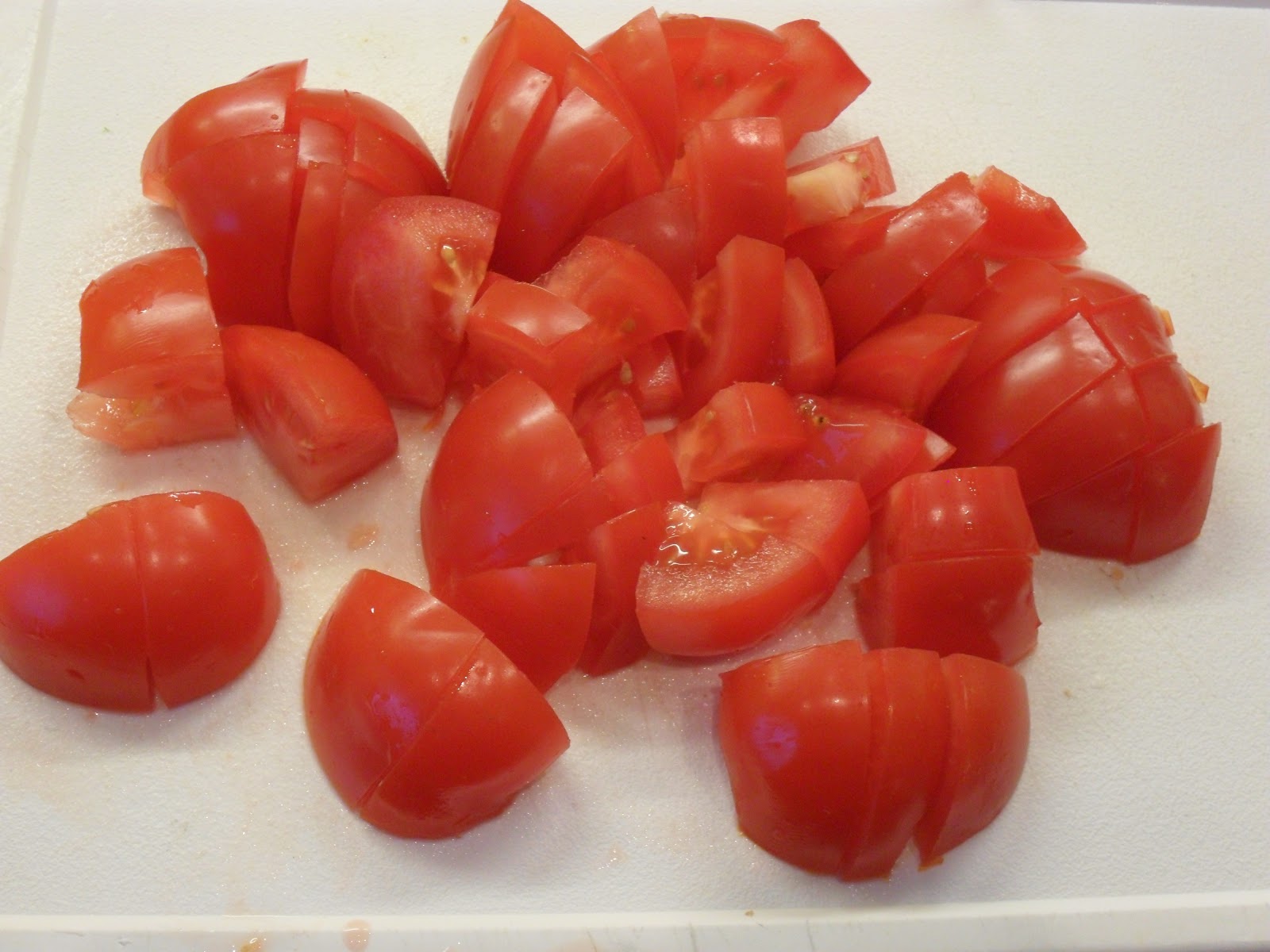
Tomatoes!

Once everything has been added in
Tomatoes, garlic, feta, coriander, what is not to like?!

Sunday, 29 April 2012

Springtime themed Sunday lunch

We had a couple of friends over for Sunday lunch, last Sunday when the weather was actually nice, and decided that we were filled enough with the joys of spring to have a spring themed lunch. 

We had Ottolenghi's stuffed onions to start, then Hugh Fearnley-Whittingstall's macaroni and peas with tomato, mozzarella and basil salad, and Delia's Eton mess to finish. Am slightly uncomfortable about plagiarising recipes but you can get to all of them through the links.

The stuffed onions are probably the fiddliest dish that we make regularly basically because it is so delicious that I kind of don't care that it's fiddly. It involves making stuffing of: parsley, feta, spring onions, garlic, breadcrumbs, grated tomato, olive oil, salt, and pepper. Then boiling the halved outer layers of the onion in stock and white wine for five minutes. Then stuffing them and baking for around 45 minutes. The resulting onions look a bit like little missiles but who cares?

Stuffing for onions
Stuffing mixture for onions
Pretty onion shells
More pretty onion shells


Little onion missiles

Cooked onion shells


More little onion missiles
Hugh Fearnley-Whittingstall's recipes - by contrast - are much, much simpler.  But still really good.  I love the macaroni and peas recipe - so easy, just mashing some peas (and keeping some whole) with butter and garlic and parmesan.  What could possibly be bad about that?  What I love about it is that it really tastes of peas. I know that sounds silly but peas are such an underrated vegetable and they deserve their time in the spotlight.  Poor peas. Best known for stealing a princess's night's sleep. 

The humble pea - photo from patrickbaty.co.uk

Tomato and mozzarella salad - like most Italian food is as good as the quality of its ingredients.  We had tasty tomatoes so it was delicious.  


Tomato, mozzarella, and basil salad
Eton Mess - I went for Delia's recipe, which was a nice way to round off the meal but, I think, next time, I might not puree the strawberries for the sauce but just mash them a little.  I really like strawberries and I think I'd rather keep more of their texture.  I failed to take a photo of it but plan to remake it soon and will take photographs then.


Overall verdict:  thought this meal worked well, was well balanced, and I might make it again for (different) guests.


Monday, 23 April 2012

Kosheri and spicy tomato sauce - Ottolenghi recipe

One of my favourite Gujarati dishes is "kitchari" - split mung beans (other split lentils work too) and pudding rice cooked up together with a dollop of ghee (or butter) and a bit of salt.  My nanima (maternal grandmother) particularly likes it with tomato curry (garlicky, lemony, slightly sweet, lovely - next time I make it, I will attempt to write it up as a recipe, but it's something I very much do by eye) and sev (crispy gram flour vermicelli noodles).

Mmm, tomatoes
When my lovely husband gave me Ottlenghi:  the cookbook, one of the recipes that caught my eye was the one for kosheri and spicy tomato sauce as it sounded pretty similar.  So, the other day, that's what I cooked.  The full recipe can be found in various places online, e.g. here but I don't want to plagiarise it by writing it all out.

Vermicelli noodles looking funny


It was a strange experience, eating it, because it is indeed very similar to kichari and tomato curry, but subtly different.  The Ottlenghil tomato sauce was much tangier due, I think, to the cider vinegar - to be honest, I think I slightly prefer the sweeter, more lemony, Gujarati version of this but it was nice as a change.  The kosheri was a much more interesting texture than kitchari, I particularly liked the addition of fried onions, but, really, I think the two dishes mostly just serve different roles:  kitchari is a bland, comfort-type food, I sometimes eat left over kitchari for breakfast because it is a bit like porridge; kosheri is more interesting, you could eat it on its own for lunch.
Mmmm, tomatoes..
Even the worm in the rock dreams of fresh herbs!
Overall verdict:  how far wrong can you go with tomatoes, lentils, butter-fried vermicelli noodles, and fresh herbs?

Kosheri
On the recipe itself..  I love Ottolenghi and, as usual, the recipe was incredibly precise - I always want to ask him, "does it really matter if I fry this for 7 minutes instead of 6?  REALLY?" and, as usual, if you follow it, you will end up with delicious food (which isn't always the case with cookbooks).

But, this time, I thought the ordering of the recipe was peculiar.  It suggests you make things in a sequence that would make the whole process take well over an hour when, if you read the recipe through completely, you can reorder it to make it much faster.  In particular, I think it's bizarre that you get to the end of cooking the tomato sauce, then the kosheri and - only then - does he tell you to fry a couple of onions for 20 minutes.  I didn't actually mind that much because I did read the whole recipe through and reorder it but, if I were hungry and got to the onion instruction, I'd have been Quite Annoyed.